
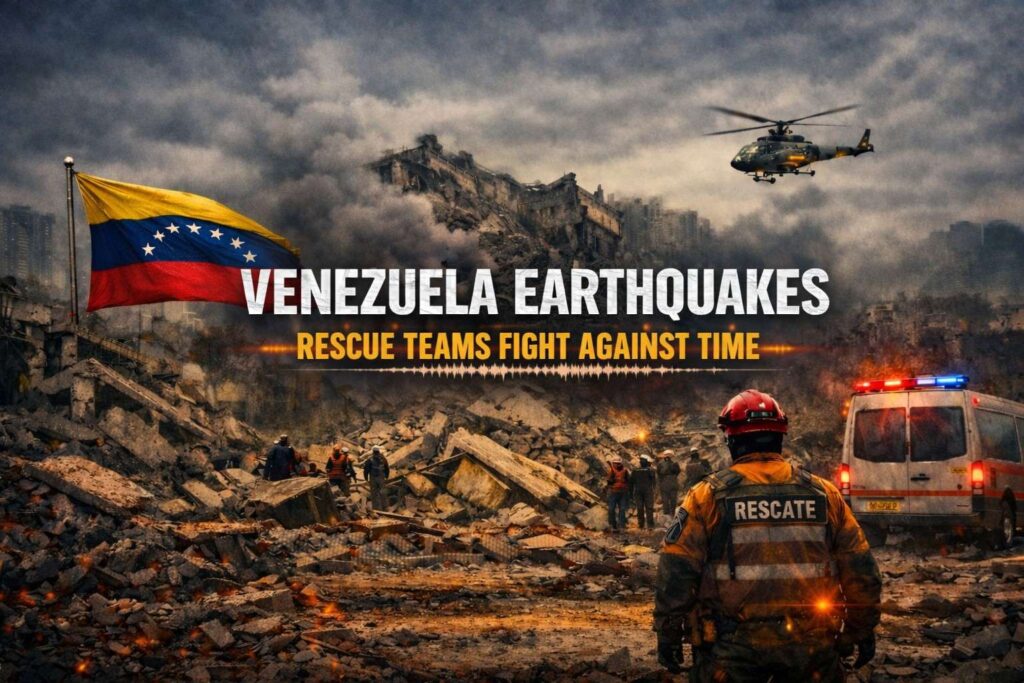
When Buildings Fail: How Corruption, Shoddy Materials, and Weak Codes Turned Venezuela’s Earthquake Into a Structural Catastrophe
A natural disaster becomes a national tragedy when the buildings meant to protect people become the very structures that kill them. In Venezuela, the overwhelming number of collapsed homes and buildings after the recent earthquake was not simply the work of nature — it was the result of decades of corruption, weak building codes, and the widespread use of substandard construction materials.
This was not an unavoidable disaster. It was a preventable collapse.
- Outdated and Weak Building Codes
Modern seismic‑resistant construction standards exist for a reason: they save lives. Countries like Chile, Mexico, and Japan have strict codes requiring reinforced concrete, proper rebar density, shear walls, and foundation anchoring designed to withstand earthquakes.
Venezuela does not.
Many of the country’s building codes date back decades and have never been updated to reflect modern engineering knowledge. Enforcement is inconsistent, especially outside major cities. Municipalities lack trained inspectors, structural engineers, and the equipment needed to verify compliance.
The result is simple: buildings constructed in the last 20–30 years often lack the basic structural elements required to survive even moderate seismic activity.
- Corruption in Construction Permits
Even when codes exist, they mean nothing if corruption overrides them.
Investigations by local journalists, NGOs, and engineering associations have documented a pattern of:
- Payoffs to inspectors to approve unsafe structures
- Bribes to obtain construction permits without meeting requirements
- Fake compliance certificates issued by corrupt officials
- “Ghost inspections” where no engineer ever visits the site
- Political favoritism in awarding building contracts
This corruption is especially common in:
- Public housing projects
- Rapid‑build government programs
- Politically connected private developments
- Low‑income urban zones
When safety becomes optional, collapse becomes inevitable.
- Shoddy and Dangerous Building Materials
Years of economic collapse and hyperinflation have pushed builders toward cheaper, weaker, and often dangerous materials. Engineers inside Venezuela have repeatedly warned that many buildings constructed in the last decade would not pass even basic structural tests.
Common problems include:
- Low‑grade cement
- Recycled or brittle rebar
- Sand contaminated with salt (which weakens concrete)
- Hollow bricks with thin walls
- Uncertified structural steel
- Improvised mixtures to stretch limited supplies
These materials may stand upright in calm weather — but they fail catastrophically under seismic stress.
- Collapse of Regulatory Institutions
The agencies responsible for enforcing building codes have been hollowed out by:
- Budget cuts
- Loss of technical staff
- Emigration of engineers
- Political appointments replacing experts
- Lack of inspection equipment
- No independent oversight
When the institutions collapse, the buildings collapse.
- Public Housing Built in a Rush
Government housing programs such as “Gran Misión Vivienda Venezuela” built hundreds of thousands of units — but many were constructed rapidly to meet political deadlines.
Residents reported:
- Cracks in walls
- Water leaks
- Structural instability
- Poor foundation work
- Weak concrete mixtures
These buildings were already failing before the earthquake. The quake simply finished the job.
- Why So Many Buildings Collapsed During the Earthquake
Combine all the above:
- Weak codes
- Corruption
- Shoddy materials
- No inspections
- Political pressure
- Institutional decay
And you get a perfect storm.
During the earthquake:
- Buildings pancaked vertically
- Walls sheared off
- Foundations shifted
- Entire blocks collapsed
- Public housing towers suffered catastrophic failures
- Older buildings crumbled due to lack of retrofitting
This was not “earthquake damage.”
This was man‑made vulnerability exposed by nature.
- The Human Cost of Structural Failure
When a building collapses, it is not concrete that dies — it is people.
Families were buried under their own homes. Children were trapped in structures that should never have been approved. Entire communities lost everything because the buildings around them were never built to survive.
A government’s responsibility is to protect its citizens.
In Venezuela, that responsibility was ignored, corrupted, and abandoned.
- A Disaster That Could Have Been Prevented
Earthquakes are natural.
Mass structural collapse is not.
The tragedy unfolding in Venezuela is the result of choices — political choices, economic choices, corrupt choices — made over decades. Choices that prioritized speed over safety, loyalty over expertise, and profit over human life.
The Venezuelan people deserved buildings that protected them.
Instead, they were given structures that failed them.
And when buildings fail, governments fail.
Comments