
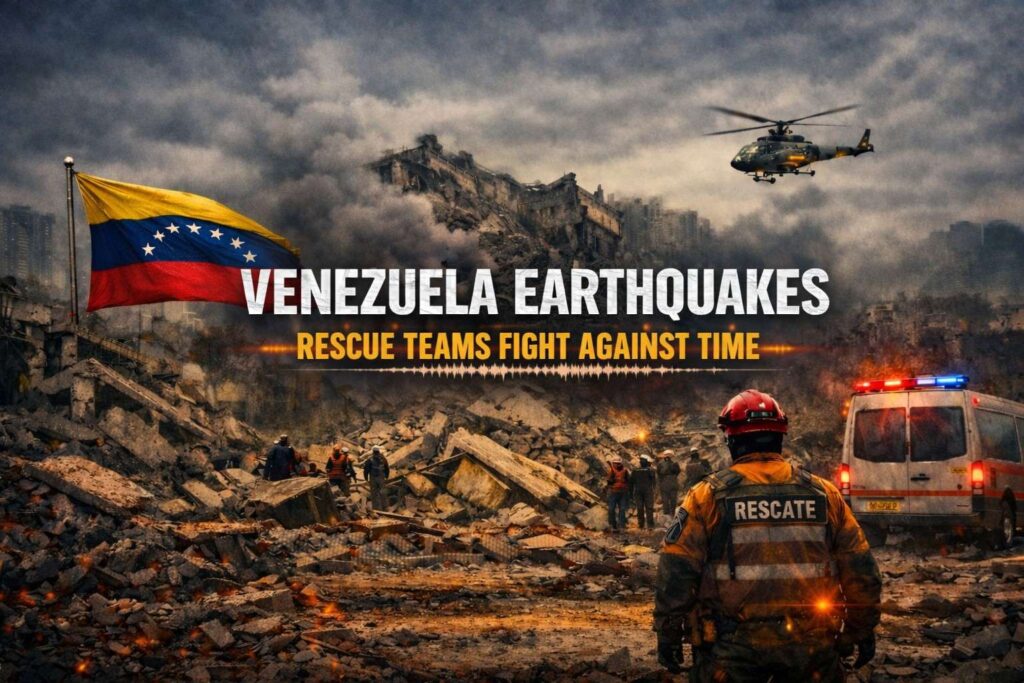
Voices from the Rubble: The Human Stories Behind Venezuela’s Earthquake Tragedy
Article:
When the ground stopped shaking in Venezuela, the silence that followed was not peace — it was shock. Dust hung in the air like fog. Sirens wailed in the distance. And across collapsed neighborhoods, voices rose from the rubble — calling for loved ones, calling for help, calling for hope.
This is the part of the story numbers cannot tell. These are the human lives behind the tragedy.
Families Who Lost Everything
In the coastal city of Cumaná, the Hernández family stood outside what used to be their apartment building — now a flattened stack of concrete layers.
“We heard the walls groan,” said María Hernández, still covered in dust. “Then everything fell at once.”
Her husband pulled their two children out through a narrow gap in the debris. Their home, their belongings, their sense of safety — gone in seconds.
Across the region, similar stories echo: elderly residents trapped in older structures, children rescued from unstable housing blocks, families separated in the chaos of evacuation. Each story is a reminder that the earthquake didn’t just break buildings — it broke lives.
Neighbors Who Became Rescuers
Long before official rescue teams arrived, ordinary Venezuelans became first responders.
In Puerto La Cruz, neighbors formed a human chain to remove debris from a collapsed home.
“We didn’t think,” said volunteer rescuer Daniel Rivas. “We just moved.”
Youth groups cleared rubble with bare hands. Firefighters worked without proper equipment, relying on flashlights and improvised tools. Entire blocks coordinated search efforts using whistles and phone lights.
Their courage filled the gap left by strained institutions — a testament to community resilience.
The Silent Heroes
Some heroes never appear in headlines.
Nurses treated injuries with limited supplies, improvising splints and bandages.
Teachers turned schools into shelters, organizing sleeping areas and food distribution.
Local cooks prepared meals for displaced families, feeding hundreds from makeshift outdoor kitchens.
These quiet acts of service kept communities alive in the days after the quake.
The Emotional Toll
Beyond the physical destruction lies a deeper wound — grief, fear, and uncertainty.
Parents worry about where their children will sleep.
Families mourn loved ones lost beneath collapsed structures.
Entire neighborhoods face the trauma of returning to unsafe homes or temporary shelters.
Yet amid the sorrow, hope persists. Survivors speak of gratitude for neighbors who saved them, volunteers who comforted them, and strangers who offered water, blankets, and prayers.
A Call for Answers
As the dust settles, survivors are asking not only for help — but for accountability.
Why did so many buildings fail so catastrophically?
Why were construction warnings ignored?
Why were rescue resources so limited?
These questions connect directly to the structural failures exposed in our previous report. The human stories make the urgency impossible to ignore.
Closing Reflection
In the rubble of Venezuela’s broken buildings, the strongest structures left standing are its people — neighbors who became rescuers, volunteers who became lifelines, and families who held onto hope even as their world collapsed around them.
Their voices deserve to be heard. Their stories deserve to be told. And their courage deserves to be remembered.
Comments