
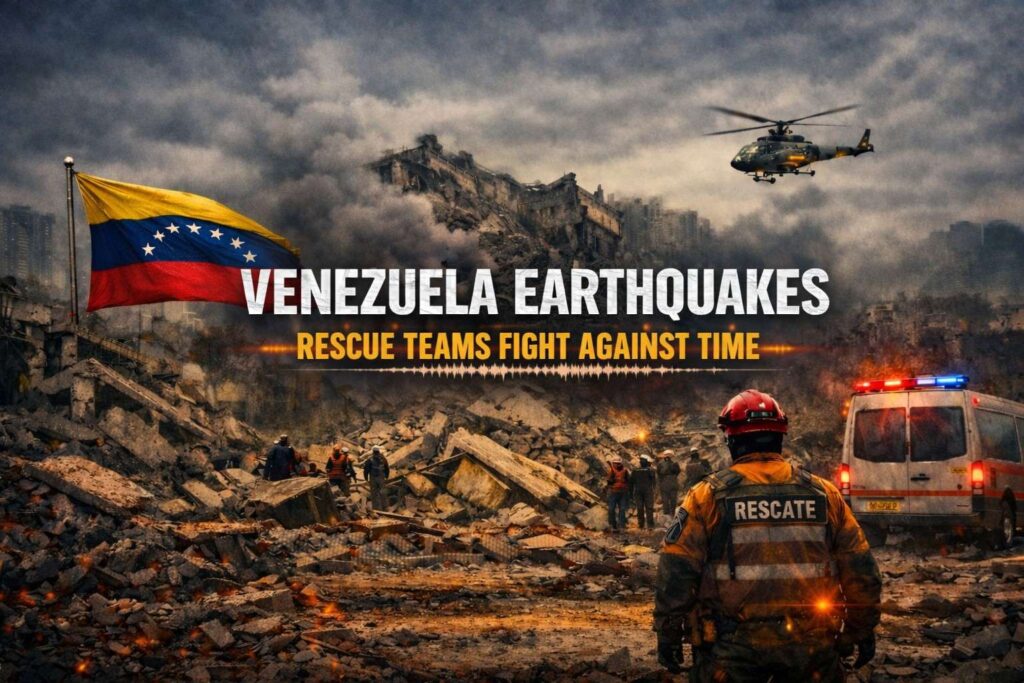
Lessons for Latin America: Could This Happen Elsewhere?
Latin America has always lived with the tension between natural beauty and natural risk. Earthquakes, hurricanes, landslides, volcanic activity — these forces shape our geography, our architecture, and our collective memory. But the recent Venezuelan earthquake has forced a deeper question into the regional conversation:
Could this level of devastation happen elsewhere in Latin America?
The uncomfortable answer is yes — and not because of fate, but because of patterns.
1. Shared Seismic Vulnerabilities
Many Latin American nations sit on or near active tectonic boundaries. Chile, Peru, Ecuador, Colombia, Mexico, and parts of Central America all experience regular seismic activity. Venezuela’s tragedy is not an isolated anomaly — it is part of a continental reality.
The question is not if earthquakes will occur, but how prepared each nation is when they do.
2. Infrastructure Gaps Across the Region
The Venezuelan quake exposed weaknesses that exist in multiple countries:
- aging buildings
- informal construction
- limited enforcement of building codes
- uneven access to engineering expertise
- fragile electrical and water systems
These vulnerabilities are not unique to Venezuela. They exist in cities and towns across the region, especially where rapid urban growth has outpaced regulation.
3. Emergency Response Capacity Varies Widely
Some nations have strong disaster‑response agencies. Others rely heavily on community improvisation. The Venezuelan quake showed how quickly communication networks, transportation routes, and medical facilities can become overwhelmed.
A regional lesson emerges: preparedness is not a luxury — it is a necessity.
4. The Human Factor: Resilience and Solidarity
Latin America has a long history of communities stepping up when institutions falter. Neighbors become first responders. Families become lifelines. Local leaders become coordinators.
This resilience is powerful — but it should not be the primary plan. It should be the backup.
5. A Regional Opportunity for Reform
The Venezuelan earthquake is a warning, but it is also a catalyst. Countries across the region can use this moment to:
- modernize building codes
- strengthen enforcement
- invest in early‑warning systems
- improve emergency communication networks
- train local response brigades
- create cross‑border cooperation agreements
Preparedness is not just about preventing loss — it is about protecting dignity, stability, and the future.
6. Could This Happen Elsewhere?
Yes. But it doesn’t have to be as devastating.
Latin America has the knowledge, the talent, and the community strength to reduce risk dramatically. The question is whether leaders will act before the next disaster forces their hand.
7. Venezuela’s Tragedy as a Continental Turning Point
If the region chooses to learn from Venezuela — truly learn — then this earthquake could become a turning point. A moment when Latin America decided that resilience is not enough, and that prevention must become the new standard.
The lesson is clear:
Natural disasters are inevitable. Catastrophic outcomes are not.
Comments