
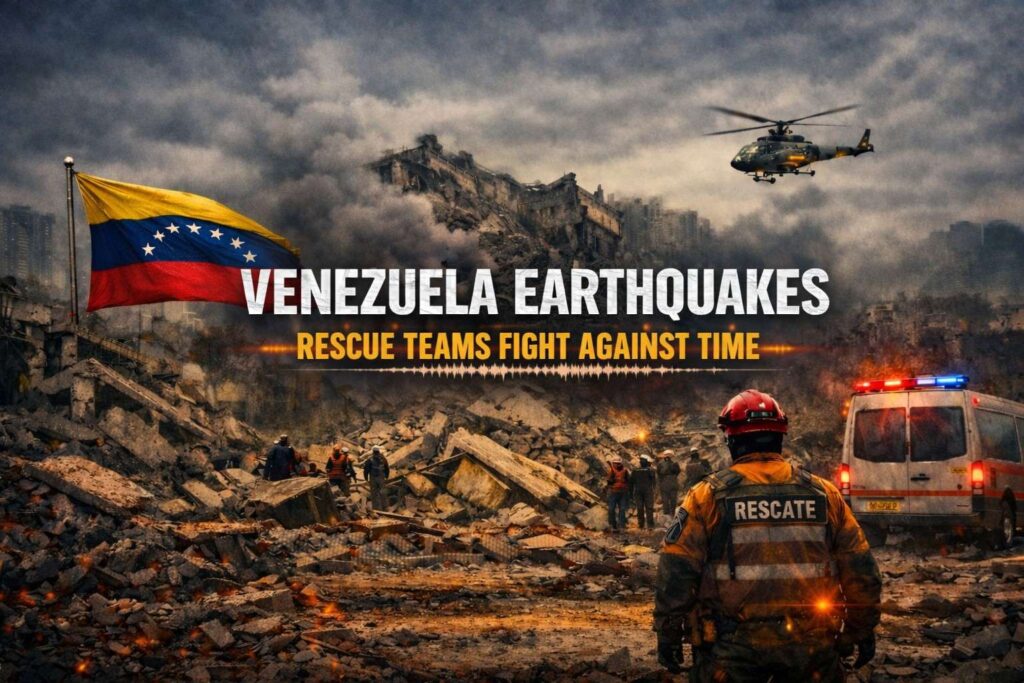
A Nation Shaken — And What Lies Below the Surface
When Venezuela’s ground convulsed, the destruction above was only half the story. Beneath the rubble, beneath the fractured highways and collapsed homes, the Earth revealed a deeper truth: the country’s most vulnerable fault lines have been quietly shifting for decades.
Geologists and seismic researchers have long warned that Venezuela sits on a complex network of tectonic boundaries — a collision zone where the Caribbean Plate grinds against the South American Plate. This slow-motion battle creates stress points that eventually release energy violently, reshaping landscapes and lives in seconds.
The Hidden Architecture of Venezuela’s Fault System
Scientists studying the aftermath point to three critical fault structures:
- The Boconó Fault — a major strike-slip fault running through the Andes, responsible for some of the region’s most powerful historical quakes.
- The San Sebastián Fault — stretching along the northern coast, threatening densely populated urban centers.
- The El Pilar Fault — an east‑west system tied directly to the Caribbean Plate’s movement.
These faults don’t act alone. They interact, transfer stress, and amplify each other’s instability — a geological conversation happening miles beneath the surface.
What the Earth Told Us This Time
The latest seismic event exposed patterns scientists have been tracking quietly:
- Shallow rupture zones intensifying shaking in urban areas
- Unreinforced structures failing even under moderate seismic stress
- A lack of updated building codes in high‑risk regions
- Population growth along fault‑adjacent corridors
The Earth didn’t just shake — it sent a message. And the scientific community is urging Venezuela to listen.
A Call for Preparedness, Not Panic
Experts emphasize that earthquakes cannot be prevented, but their impact can be dramatically reduced. Countries with similar tectonic profiles — Chile, Mexico, Japan — have shown that modern engineering, early‑warning systems, and public education save lives.
Venezuela’s challenge now is to turn scientific insight into policy action.
The Path Forward
The ruins tell a story of loss.
The science beneath them tells a story of opportunity — a chance to rebuild smarter, safer, and with respect for the forces shaping the land.
For Venezuela, understanding its fault lines isn’t just geology.
It’s survival.
Comments