
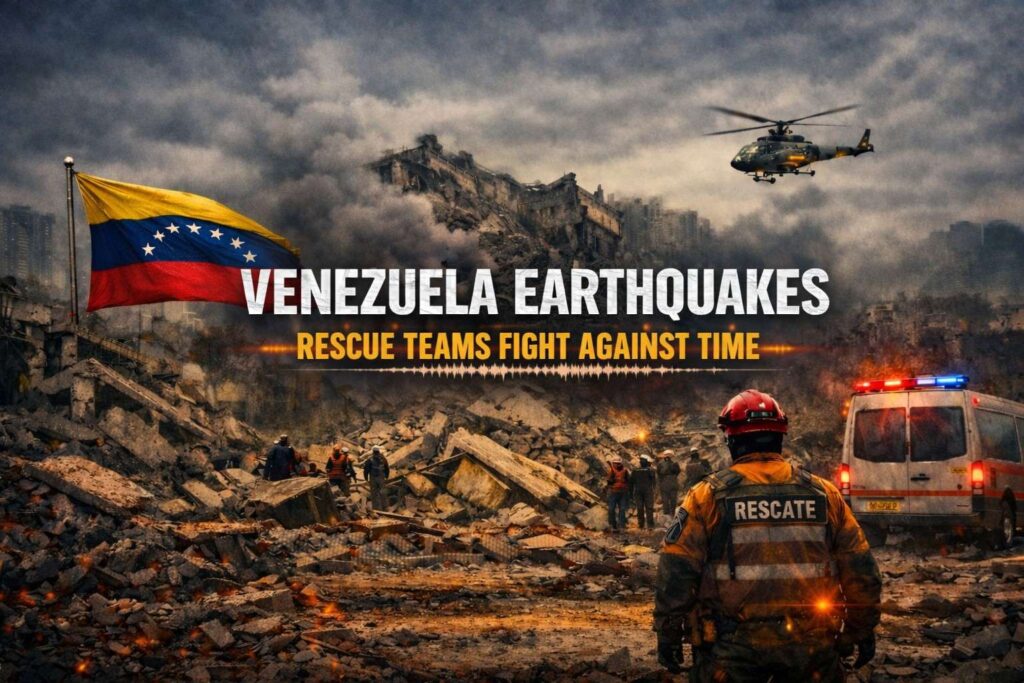
When Governments Fail Their People: Venezuela’s Earthquake and the Collapse of Responsibility
A government’s first responsibility is to protect its people — not in theory, not in speeches, but in the tangible realities of shelter, safety, access, and dignity. In Venezuela, the aftermath of the recent earthquake has exposed a painful truth: when institutions collapse, the people are left to survive on the streets, abandoned by the very structures meant to safeguard them.
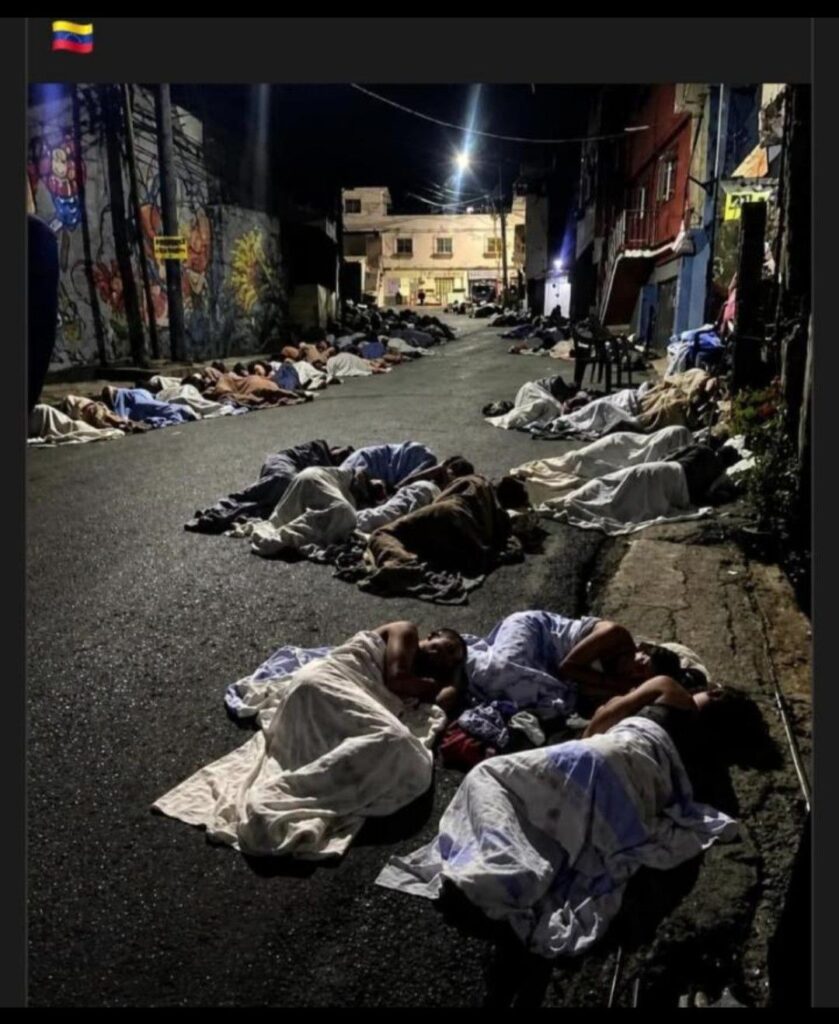
The image above, taken by a Venezuelan citizen and shared through community channels, shows families sleeping on pavement under streetlights. No tents. No shelters. No coordinated response. Just rows of human beings lying on cold asphalt, wrapped in thin blankets, waiting for help that never arrived. It is a portrait of failure — not of the people, but of the state.
- The Collapse of Basic Services
Long before the earthquake struck, Venezuela’s infrastructure had already deteriorated to crisis levels. Electricity blackouts lasting days, water shortages affecting millions, and hospitals operating without supplies or functioning equipment created a fragile environment where any disaster — natural or man‑made — would be catastrophic.
When the earthquake hit, emergency systems were already broken. Ambulances were scarce. Hospitals were overwhelmed. Communication networks faltered. The state was not prepared, and the people paid the price.
- Humanitarian Aid Obstruction
Multiple reports from journalists and humanitarian workers describe delays, restrictions, and political interference in aid distribution. International rescue teams were slowed or blocked. Access to disaster zones was tightly controlled. Supplies were routed through political channels rather than humanitarian ones.
In moments when speed saves lives, bureaucracy kills.
The result: families sleeping outdoors, injured citizens waiting for treatment, and communities forced to fend for themselves.
- Restricting Press and Information Flow
Verified accounts from reporters describe mandatory registration, wristbands, and government‑escorted transportation as the only way to enter disaster zones. Independent movement was prohibited. Journalists could not choose where to go or whom to interview. Their access — and therefore the public’s access to truth — was filtered through state control.
When a government controls information during a crisis, it controls the narrative. And when it controls the narrative, it can hide its failures.
- Corruption Inside Security Forces
Separate documented incidents reveal that criminal networks have infiltrated humanitarian logistics. In one verified case, a truck labeled as earthquake aid — carrying water bottles — was found transporting 766 packages of marijuana in a hidden compartment.
This is not an allegation. It is a confirmed seizure by Venezuelan authorities.
When aid vehicles become tools for contraband, it signals a deeper institutional rot: the collapse of accountability inside the very forces meant to protect the nation.
- Economic Collapse and Mass Displacement
Years of hyperinflation, currency devaluation, and economic mismanagement have left Venezuelans unable to afford basic necessities. Salaries worth less than $10 a month cannot sustain families. Over seven million Venezuelans have fled the country, creating one of the largest displacement crises in the hemisphere.
The earthquake did not create this suffering — it exposed it.
- Housing and Infrastructure Failure
Unsafe buildings, lack of maintenance, and absence of emergency shelters left thousands without a place to go after the earthquake. The photo at the top of this article is not an isolated moment — it is a symptom of a nationwide collapse in housing security.
When people sleep on streets after a disaster, it means the state has failed to provide even the most basic refuge.
- The Human Cost of Government Failure
The Venezuelan people are resilient. They have endured economic collapse, political turmoil, and humanitarian crises. But resilience is not a substitute for governance. No population should be forced to sleep on pavement because their government cannot provide shelter. No family should wait for rescue teams that never arrive. No citizen should be left in darkness while institutions crumble around them.
The earthquake did not break Venezuela. It revealed how broken Venezuela already was.
- A Nation Deserving Better
Governments exist to serve their people. When they fail, the people suffer — visibly, painfully, and publicly. The image of Venezuelans sleeping on the street is not just a snapshot of a moment. It is a mirror reflecting years of institutional decay.
The world must see it.
The region must acknowledge it.
And Venezuela’s people must not be forgotten.
They deserve safety.
They deserve shelter.
They deserve truth.
They deserve a government that does not fail them.
Comments