
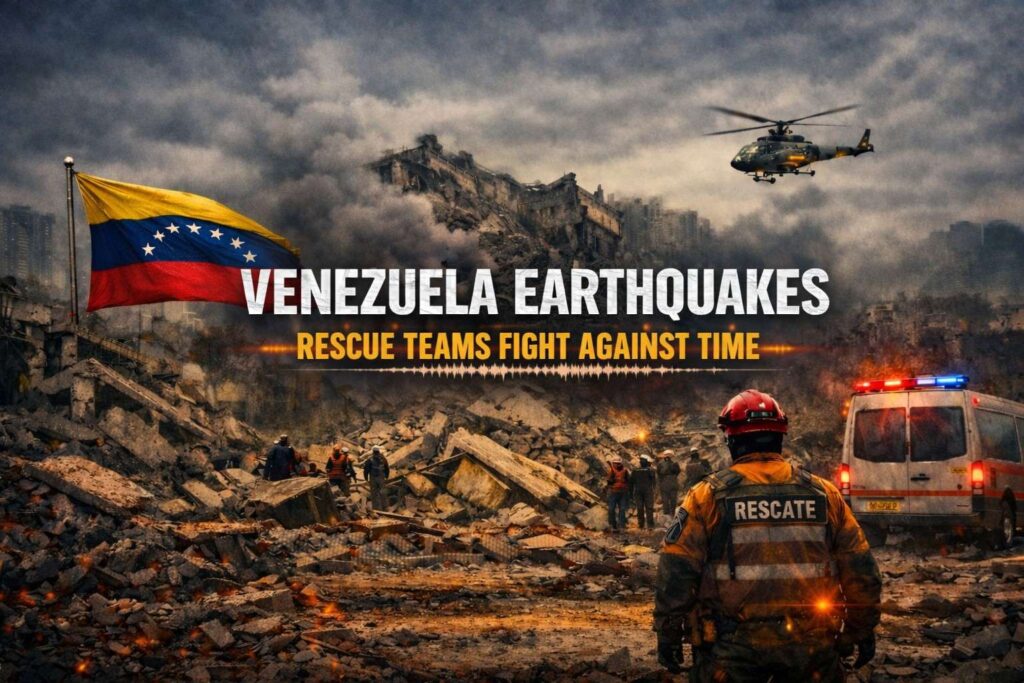
When Rescue Turns to Recovery: The Saddest Chapter of Every Disaster Response
There is a moment in every disaster — quiet, heavy, and unmistakable — when the mission changes. When the shouts of “We found someone!” fade. When the dust settles but the grief rises. When rescue teams, exhausted and still listening for miracles, must face the truth no one wants to say aloud:
We are no longer searching for survivors. We are searching for the missing.
The timeline no one wants to accept
In major earthquakes, international standards follow a painful pattern:
0–24 hours: Highest chance of survival.
24–72 hours: Miracles still happen — trapped pockets of air, children shielded by debris, elderly survivors found dehydrated but alive.
Day 4–7: Rescues become rare. Teams begin transitioning.
Day 8+: Operations shift from rescue to recovery — a term that feels clinical, but carries enormous emotional weight.
In Venezuela, this timeline has unfolded in real time. Day 1 brought chaos. Day 2 brought miracles. Day 3 brought hope. Day 4 brought silence. Day 5 brought the first official announcements that the mission was changing.
Examples that break the heart
Hour 53: A child was pulled alive from a collapsed home in La Guaira, protected by a fallen beam that created a tiny air pocket.
Hour 71: Two elderly siblings were rescued after tapping on a pipe — rescuers said the sound was “so faint we almost missed it.”
Hour 89: A young mother was found alive, dehydrated but conscious, after shielding her baby. The baby did not survive.
Hour 104: A final miracle — a teenager rescued from a collapsed apartment block. After that, no new survivors were found.
These moments are the ones rescue teams replay in their minds when the transition begins.
The emotional shift
Rescue teams describe this phase as the hardest part of their profession:
The silence becomes louder.
The digging becomes slower.
The families become more desperate.
The teams begin preparing themselves for what they will find next.
One rescuer said it best:
“When the cries stop, the work becomes heavier — not physically, but spiritually.”
Why recovery still matters
Recovery is not giving up.
Recovery is dignity.
Recovery is closure.
Recovery is the promise that every person will be found, honored, and returned to their family.
It is the final act of respect.
Hope in the quiet
Rescue is hope.
Recovery is love.
Both are acts of courage.
And Venezuela is showing the world that even in grief, a nation can stand together — neighbors, families, rescuers, volunteers, strangers — all refusing to let anyone be lost alone.
Comments